
Stepping into the Canadian healthcare system can feel like entering a new world, especially when you hear terms and phrases that are unfamiliar. This blog is your friendly guide to the must-know lingo in Canadian healthcare, helping you feel like you’re part of the team from day one. Imagine confidently understanding every word spoken around you – that’s our goal!
1. Decoding Medical Collocations: The Language of Care
Picture yourself in a busy Canadian hospital, effortlessly using terms like ‘manage symptoms’ or ‘conduct an assessment.’ This proficiency not only boosts your confidence but also earns the respect and trust of your peers and patients.
In healthcare, clarity and precision are vital. By mastering medical collocations, you’re not only enhancing your communication skills but also ensuring patient safety and effective care.
Medical collocations are combinations of words frequently used together in the healthcare setting. Understanding these can be crucial for effective communication. For example, ‘acute pain,’ ‘chronic condition,’ and ‘administer treatment’ are phrases that carry specific meanings in a medical context.
It’s normal to feel overwhelmed by these new terms. You might worry about misunderstandings or not being able to express yourself accurately. Remember, every healthcare professional, even those born in Canada, had to learn this language.
Start by making a list of common medical collocations. Use flashcards, engage in role-playing scenarios, or find interactive online resources to practice these phrases in context.
2. Navigating Complex Situations with the Right Language
Envision a scenario where you’re updating a patient’s family. Imagine using the right collocations to convey hope, concern, or reassurance, impacting not just the patient’s care but also their family’s experience. Respect and empathy are core values in nursing. Using the appropriate language demonstrates respect for your profession and empathy for your patients, ensuring that you’re providing care that is both compassionate and professional. You might feel anxious about using the wrong terms in critical situations. This anxiety is normal but can be alleviated through practice and experience.
Certain situations in healthcare require the use of specific collocations. For instance, discussing a patient’s ‘progressive disease’ differs significantly from talking about a ‘stable condition.’
Engage in simulated conversations or shadow experienced colleagues. Take note of how they use medical collocations in different contexts and try incorporating these patterns into your interactions.
3. Building Confidence and Connectivity through Language
Language is more than a tool for communication; it’s a bridge that connects people. In a multicultural environment like Canadian healthcare, being proficient in medical collocations can help you build stronger connections with your team and patients. Initially, you might feel like an outsider due to language barriers. However, as you become more familiar with healthcare lingo, you’ll start feeling more integrated and accepted in your new environment.
Imagine a day when you no longer have to pause and translate terms in your head. You’re partaking in conversations, joking with colleagues, and comforting patients with ease, feeling truly a part of the Canadian healthcare family.
How do you do that? Practice, practice, practice. Use every opportunity to converse with colleagues, participate in meetings, and even engage in casual conversations in the break room. The more you practice, the more natural these collocations will become.
Remember, inclusivity and teamwork are key in healthcare. When you speak the same language as your colleagues, it fosters a sense of belonging and teamwork, crucial for a harmonious work environment.
Now that you’re familiar with these essential healthcare terms, you’re better equipped to navigate the Canadian healthcare environment. Remember, understanding the lingo is more than just words; it’s about connecting with colleagues and patients, and feeling more at home in your new workplace. Keep practicing, and soon these terms will be a natural part of your daily conversations!
If you are looking for personal guidance and heartfelt advice on your CELBAN journey, then ‘Dear Kim’ is a perfect choice. Follow Dear Kim for a wealth of insights and answers to your questions.
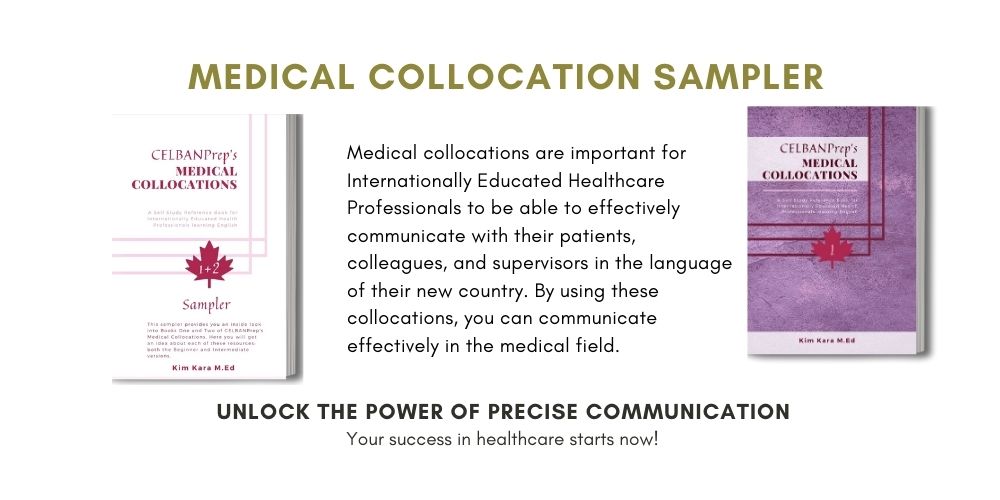
If you are starting your journey in medical English and looking to build a solid foundation, then ‘CELBANPrep’s Medical Collocations: Beginners‘ is ideal. Available on, it’s perfect for grasping basic medical collocations.

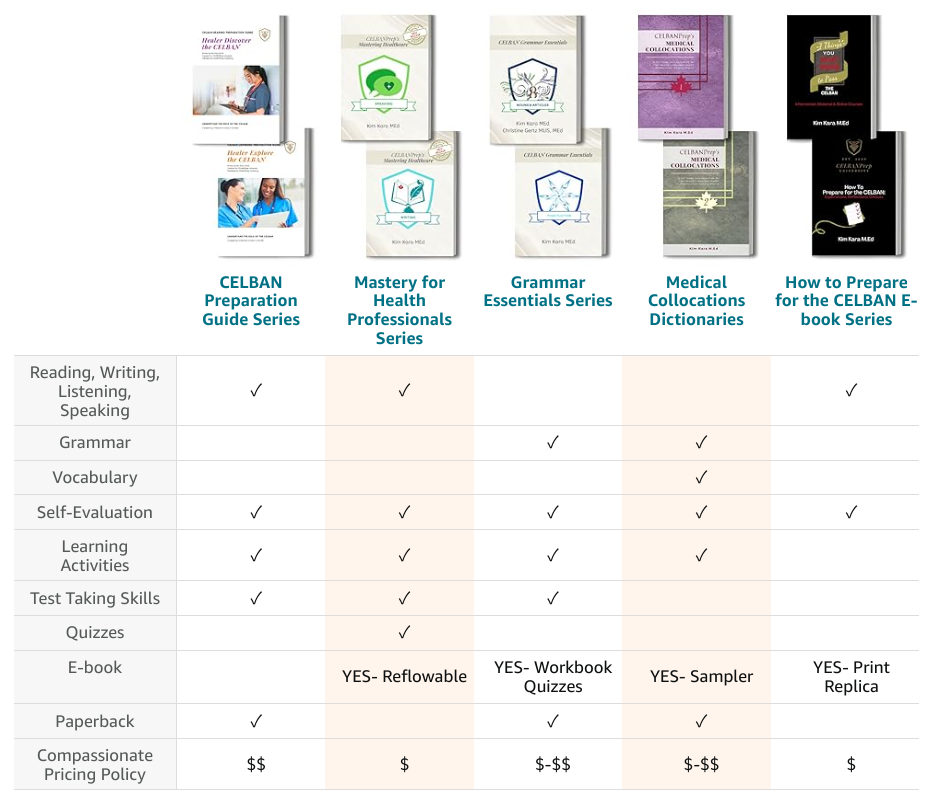
Find the English Mastery for Health Professionals and CELBAN Preparation paperbacks and e-books in various global Amazon stores:
E-Books are available at these Amazon Marketplaces: (Many are FREE with Kindle Unlimited.)
US UK BR DE ES FR IN IT JP NL MX PL SE AU CA
Paperback books are available at the following Amazon Marketplaces:
US UK DE ES FR IT JP MX NL PL SE AU CA



























 Dear Kim
Leave a comment